Quicktron x LILLYDOO
Overview
In today’s fast-paced retail landscape, efficiency, scalability and workforce optimization are critical to maintaining a competitive edge. LILLYDOO, a fast-growing baby care brand specializing in premium diapers and wet wipes, has successfully transformed its fulfillment operations through the integration of Quicktron’s Autonomous Mobile Robots (AMRs).
Operating across 7 European countries and distributing products via major e-commerce platforms as well as retail stores, LILLYDOO faced increasing pressure to optimize its logistics processes. This case study explores how the company implemented a shelf-to-person solution to streamline its warehouse operations and achieve measurable gains in productivity and efficiency.
About LILLYDOO
LILLYDOO is a European baby care brand offering high-quality diapers and wet wipes designed with both performance and comfort in mind. The company serves customers in 7 European countries through a combination of e-commerce platforms and retail distribution channels.
Challenges And Objectives
Business Challenges
As LILLYDOO expanded its market presence, its existing fulfillment processes began to show limitations
- Increasing absenteism and vulnerability to labor availability in the region
- Inefficient workflows caused overlap between picking and forklift activities
- Limited storage optimization restricted scalability within the existing warehouse footprint
To sustain growth while maintaining service quality, LILLYDOO sought greater operational autonomy by implementing an intelligent, automated fulfillment system.
The company defined 3 primary goals for the project:
Solution and Benefits
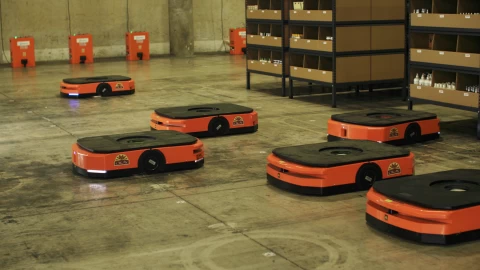
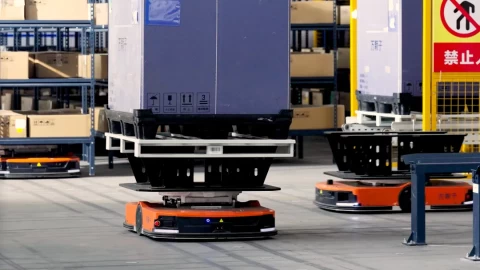
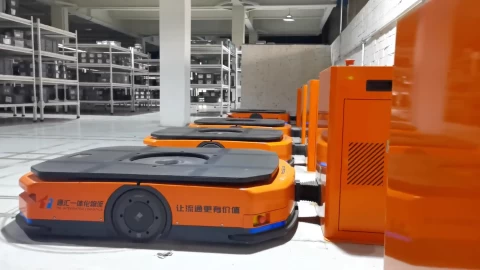
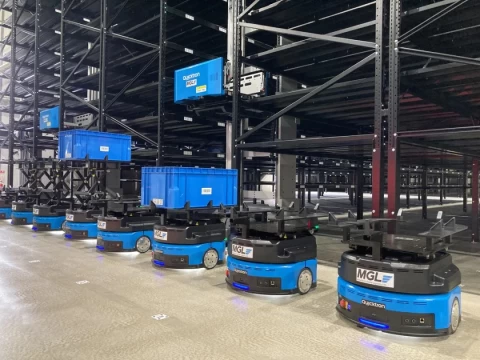
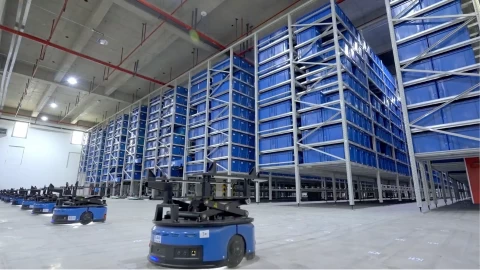
LILLYDOO implemented a shelf-to-person system powered by 20+ M100 autonomous mobile robots. This approach fundamentally changed how goods are handled within the warehouse.
Instead of workers moving around the warehouse to pick items directly from the pallets, the robots transport entire pallets and shelving units directly to stationary picking stations. This significantly reduces walking time and streamlines order fulfillment.
Results and Impact
The implementation of Quicktron’s shelf-to-person solution delivered strong operational improvements:
1. Resilience to labor volatility
Improved efficiency reduces overall staffing requirements, lowering exposure to absenteeism
More stable and predictable output minimizes dependence on third-party surge labor
2. Structural workplace improvements
Clearly defined zones and separated process flows
Reduced operational interference, leading to enhanced safety
3. Optimised space utilization
Facility is equipped to meet current and future demand
Scalable operations without the need to expand or relocate to a new site
Change Management & Employee Engagement
A key success factor in this project was LILLYDOO’s thoughtful approach to change management.
Rather than viewing automation as a replacement for human workers, the company fostered a culture of collaboration between employees and technology. One particularly effective initiative was allowing employees to name the robots.
This simple but powerful gesture helped:
- Humanize the technology
- Build emotional connection and acceptance
- Position Quicktron’s robots as “team members” rather than tools
As a result, the AMRs are widely seen as colleagues contributing to daily operations, improving both morale and adoption rates.
Conclusion
LILLYDOO’s fulfillment transformation demonstrates how robotics can unlock significant value in retail and e-commerce logistics. By combining a well-defined strategy, the right technology and strong employee engagement, the company successfully modernized its operations while maintaining a positive workplace culture.
This case study highlights that automation is not just about efficiency - it’s about creating smarter, safer and more scalable systems that empower both businesses and their people.

We chose automation to make our business future-proof. In the past, we did everything manually, with operators walking up to 15 km and picking items directly from pallets.
Tobias Bergenthal, LILLYDOO
Related Cases